
Cybersecurity professionals will be able to take the first ISC2-approved AI security exam in early 2027.
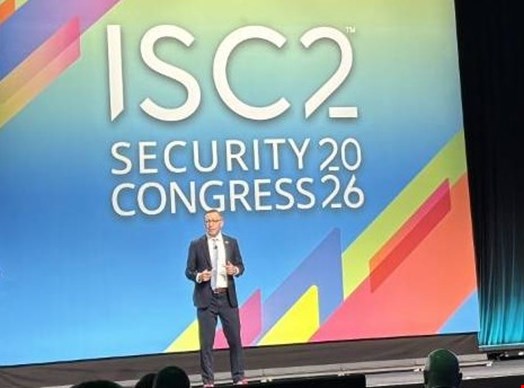
The cyber nonprofit behind the Certified Information Systems Security Professional (CISSP) qualification announced its 10th certification during its Security Congress 2026, in Denver, Colorado, on October 26.
This new credential will be dedicated to cybersecurity and AI professionals who want to showcase their knowledge in secure AI-enabled environments.
Speaking to Infosecurity, Scott Beale, CEO of ISC2, said that the certification is still under development and “doesn’t even have a name yet.”
However, he confirmed it is “being built by cybersecurity professionals, for cybersecurity professionals.”
He said the decision to develop a new “AI security benchmark for the cybersecurity industry” partly came from the desire from ISC2 members for the nonprofit to “ambitiously and vocally step into the AI safety and security space.”
The preliminary phase of the certification benefitted from the input of 10,000 volunteer professionals worldwide through Job Task Analysis surveys.
From October 26, ISC2 is opening a pilot exam phase, giving cybersecurity professionals, employers and the global cybersecurity community insight into the domains and topics the exam is designed to assess.
The nonprofit is now looking for 3000 volunteers to enrol in a beta version of the exam in December 2026. Volunteers have until November 4 to submit their interest.
Six Key Domains to Shape the AI Security Exam
The pilot exam will assess candidates’ knowledge, skills and abilities across the following areas of professional practice needed to secure AI-enabled environments:
- AI concepts and security fundamentals
- AI governance, ethics, risk and compliance
- AI data management, privacy and model security
- Secure AI architecture, engineering and identity and access management (IAM)
- Secure AI operations and incident response (IR)
- AI threats, testing and lifecycle management
Each domain includes topics and subtopics to help candidates understand the AI security expertise the exam is designed to evaluate.
In a public statement, Casey Marks, COO of ISC2, said this pilot phase aims to provide “critical evidence to evaluate whether the examination measures AI security competence reliably, fairly and defensibly, which are all key facets of the rigor essential to certification integrity and to employers’ and professionals’ trust in what earning the credential represents.”
If the pilot exam phase is successful, the certification will be available to take from the first quarter of 2027, and maybe even as early as January, Beale estimated.
Eligibility Requirements for the New AI Security Certification
This new AI security credential will be available to both ISC2 members and non-members. It will be open to professionals who hold existing ISC2 credentials as well as those who do not.
It is primarily intended for professionals responsible for securing the design, deployment and maintenance of AI and machine learning (ML) systems throughout the AI lifecycle.
This includes managing cybersecurity risks associated with AI-enabled services and extending beyond technical defense to governance, ethics, risk-based guidance and enterprise collaboration.
In addition, candidates who wish to pass this certification must meet certain criteria, including having a minimum of four years of cumulative, paid full-time experience in cybersecurity or AI-related fields, with two years in cybersecurity and one year in two or more of the domains of the AI security certification exam outline.
Candidates holding active CISSP, ISSAP, ISSEP, ISSMP, CCSP or CSSLP credential may be substituted for the entire AI security certification experience requirement.
In his Security Congress opening speech, ISC2’s CEO Beale also said that AI questions are currently being “incorporated across all other ISC2 current certifications.”
“We’ve significantly increased the amount of certificates, webinars, events and professional development capabilities in the AI safety and security space over the past six months,” he told Infosecurity.
One example is the launch of the Cyber AI Workforce Coalition, announced on October 20.